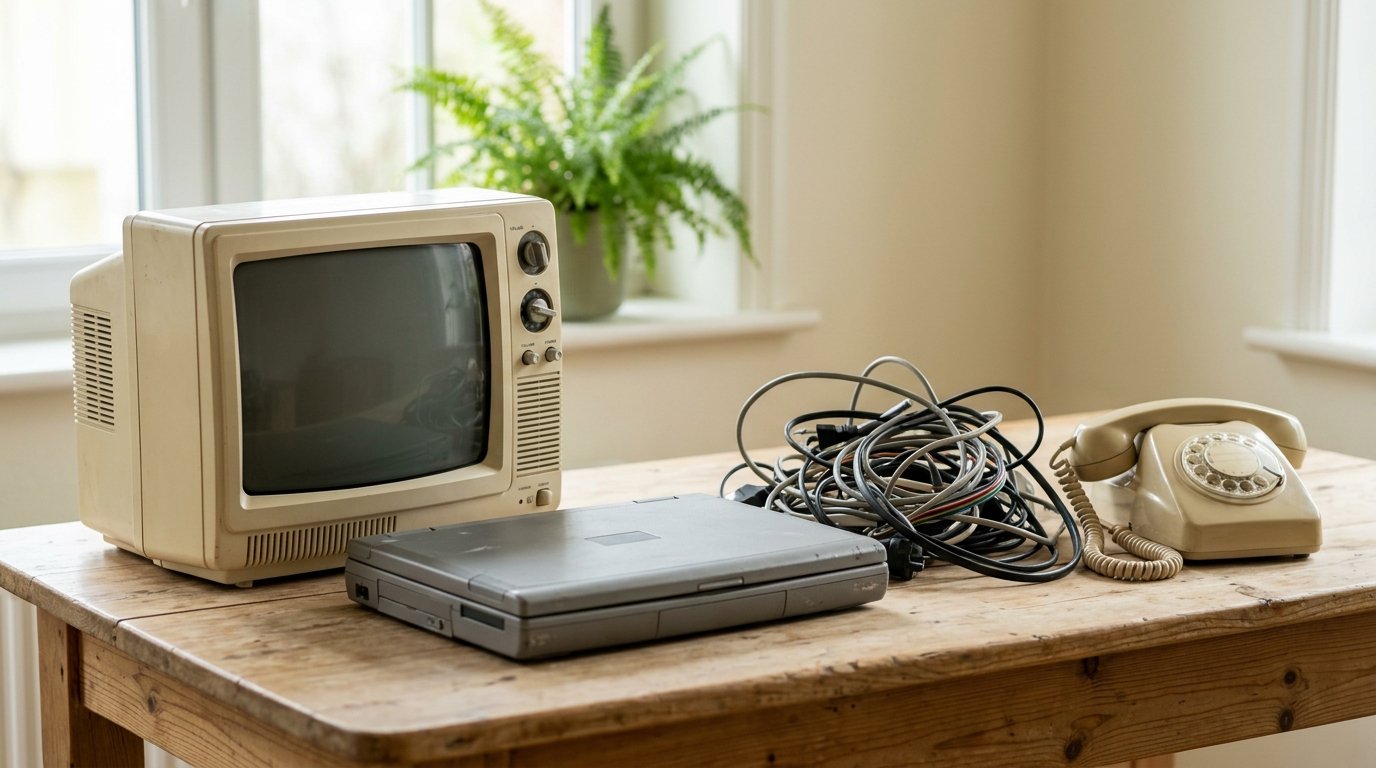
The short answer: Don’t put TVs, computers, or other electronics in your regular trash — they often contain lead, mercury, and other materials many Texas facilities won’t accept loose, and some sites prohibit them outright. Instead, use a free manufacturer take-back program, an e-waste recycler, a household hazardous waste (HHW) drop-off, or a retailer recycling program. Texas requires TV and computer makers to offer recycling options, so the greenest route is often free.
Old electronics pile up fast, and “e-waste” is handled differently from normal junk for good reason. Here’s how to get rid of it the right way in Texas.
Can I throw electronics in the trash in Texas?
As a rule, no — and you shouldn’t want to. Electronics contain heavy metals and other components that don’t belong in a landfill, and many transfer stations and recycling centers specifically list TVs, monitors, and batteries as prohibited items. Putting them in regular trash can mean a rejected load or a surcharge. The good news is that recycling them is usually easy and often free.
How do I recycle an old TV or computer for free?
Texas has manufacturer-funded take-back programs for televisions and computer equipment. The idea is simple: brands that sell TVs and computers in Texas are required to provide a way for residents to recycle them, typically at no cost. To use one:
- Identify the brand of your device.
- Look up that manufacturer’s recycling or take-back program.
- Follow their instructions — often a free mail-back label or a nearby drop-off partner.
This is the cheapest path for working or broken TVs, laptops, desktops, and monitors. If the brand is defunct or you’d rather drop everything in one place, the options below cover you.
Where else can I drop off e-waste?
- E-waste recyclers — dedicated electronics recyclers accept a wide range of devices. Some are free; some charge for CRT (old tube) TVs and monitors, which are costlier to process.
- Household hazardous waste (HHW) facilities and collection events — many Texas cities run HHW drop-offs that take electronics alongside paint, batteries, and chemicals. Find a household hazardous waste site near you and check its accepted items.
- Retailer programs — several large electronics and office-supply retailers take back old devices, sometimes with a small store-credit incentive.
- Recycling centers — some municipal recycling centers accept certain electronics. Confirm what they take first, since rules vary widely.
What about batteries, phones, and small gadgets?
- Rechargeable batteries and phones are widely accepted at retailer drop-off bins and HHW sites — never put lithium batteries in regular trash, as they’re a fire risk in collection trucks.
- Cables, chargers, and small electronics usually go with general e-waste recycling.
- Data security: wipe or destroy data on phones, computers, and hard drives before recycling. Many recyclers offer certified data destruction if you ask.
Why does this matter?
Beyond staying legal, recycling electronics recovers valuable metals and keeps toxic material out of the ground. For a site built on doing disposal honestly, e-waste is the clearest case where the “right way” is also the easy, often-free way.
FAQ
Is it illegal to throw away a TV in Texas?
Many facilities prohibit TVs in regular trash, and they’re not accepted in most curbside programs. Use a manufacturer program, an e-waste recycler, or an HHW drop-off instead.
Where can I recycle a computer for free in Texas?
Through the computer manufacturer’s take-back program, which is generally free, or at an HHW event or e-waste recycler that accepts computers at no charge.
Do recyclers charge for old tube (CRT) TVs?
Often yes. CRTs contain leaded glass and cost more to process, so some recyclers charge a fee for them even when other electronics are free.
How do I protect my data before recycling a device?
Back up what you need, then wipe the device or remove and destroy the storage drive. Ask the recycler about certified data destruction if you’re unsure.
Last updated: June 2026. Acceptance rules and fees vary by facility — confirm before you go. Need a disposal site? Every listing in the DumpFeeFinder directory shows accepted items, prohibited items, and sourced fees, date-stamped.