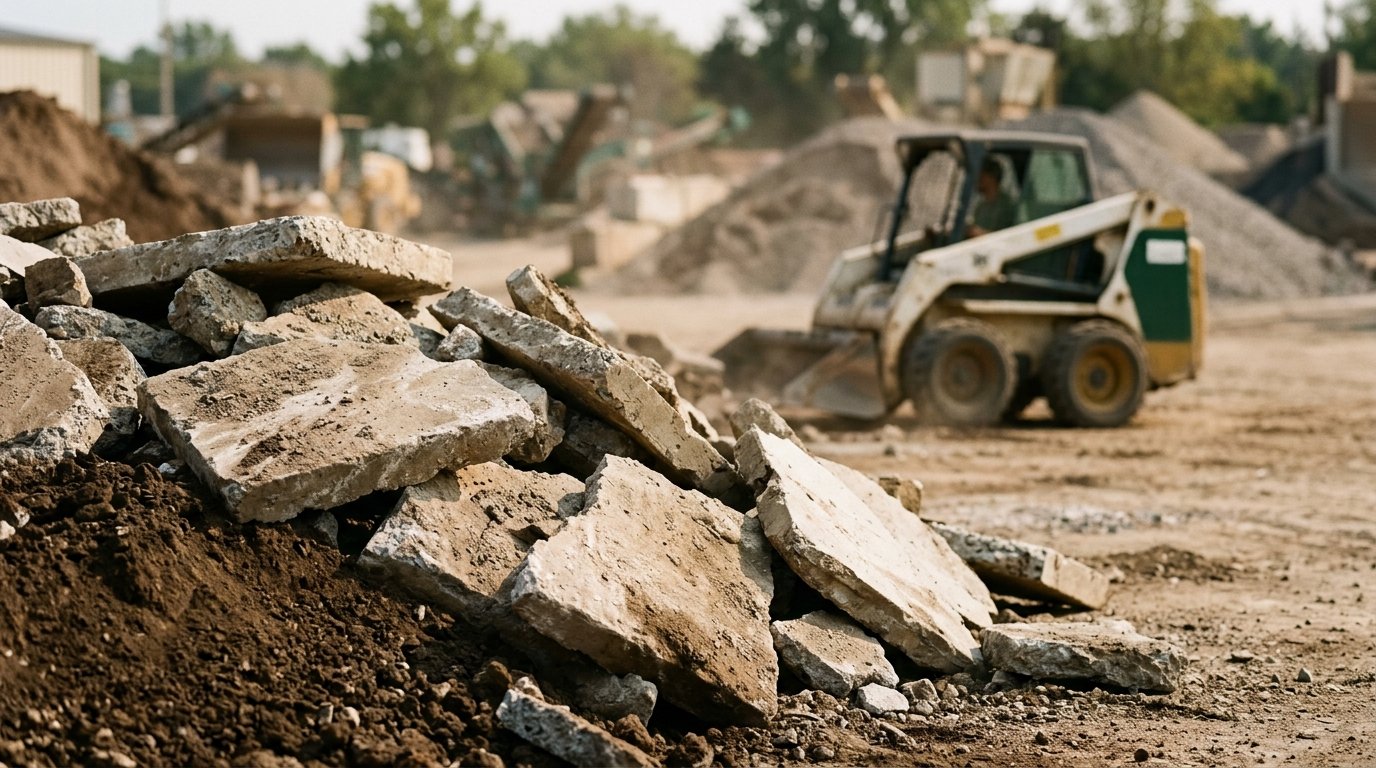
The short answer: Clean concrete, brick, and dirt are often cheaper to get rid of — or even free — compared with regular trash, because they can be recycled into new road base and fill. The key word is clean: keep concrete and dirt separate, with no trash, wood, or rebar mixed in, and many recycling yards and “clean fill” sites will take it at low or no cost. Mixed or dirty rubble goes to a landfill and is charged by weight.
Why concrete and dirt are different from trash
Broken concrete, brick, block, asphalt, and clean soil are valuable as “inert” or “clean fill” material. Crushers turn them into road base, aggregate, and fill for new projects. Because there’s a market for it, you’ll often find a recycling yard that takes clean loads cheaply — sometimes free — instead of charging full landfill rates. That’s the opposite of how most waste works, and it’s worth taking advantage of.
The golden rule: keep it clean and separated
“Clean” has a specific meaning to these sites. To qualify for the low or free rate, your load should be:
- One material at a time — concrete in one load, dirt in another. Don’t mix them with each other or with trash.
- Free of rebar where possible — some yards accept concrete with rebar, others don’t, or charge more. Ask first.
- No wood, plastic, drywall, or garbage — any contamination can bump you to the full waste rate or get the load refused.
A few minutes sorting before you load can be the difference between free and a per-ton charge.
Where to take clean concrete and dirt
Concrete and asphalt recyclers
Concrete recycling yards crush and resell the material, so they often accept clean loads at a low tipping fee — and occasionally free, since you’re supplying their raw material. This is usually the cheapest route for a driveway tear-out or patio demo.
Clean fill / dirt drop sites
Clean soil and dirt can go to “clean fill” sites — locations that need fill material for grading or land projects. Some accept it free. Quantities and quality requirements vary, so confirm they want what you have before driving out.
Landfills (for mixed or dirty rubble)
If your rubble is mixed or contaminated and you can’t separate it, a landfill that accepts inert/C&D material will take it — charged by weight. It’s the fallback when recycling isn’t an option.
Smaller jobs: reuse it yourself
For a small amount of broken concrete, you don’t have to haul it anywhere. People use “urbanite” (broken concrete slabs) for garden borders, raised beds, retaining walls, and pathways. Clean dirt can fill low spots in a yard. A “free — you haul” listing on a local marketplace often clears it fast, because landscapers want it.
Bigger jobs: a heavy-debris dumpster
Concrete and dirt are extremely heavy, so for a large demo many companies offer a smaller, dedicated “clean concrete” or “heavy debris” roll-off dumpster with a weight allowance suited to dense material. Don’t fill a regular dumpster with concrete — you’ll blow past the weight limit and pay overage fees. Tell the company exactly what you’re putting in it.
A quick checklist
- Separate concrete, dirt, and trash into different loads.
- Call the recycler or fill site to confirm they take your material and any rebar.
- Watch your vehicle’s weight — this stuff is dense.
- Cover the load and bring cash.
Find a site near you
Search your city or county in our Texas directory for recycling yards and landfills that accept concrete, brick, and dirt — listings show fees, hours, and accepted materials, with a source link and verification date. Doing a bigger remodel? See our full construction & demolition debris guide, and for statewide pricing read how much it costs to dump trash in Texas.
Acceptance rules and “free” thresholds for clean fill vary by site and change often. Confirm the material, condition, and quantity a facility will take on its listing before you load up.