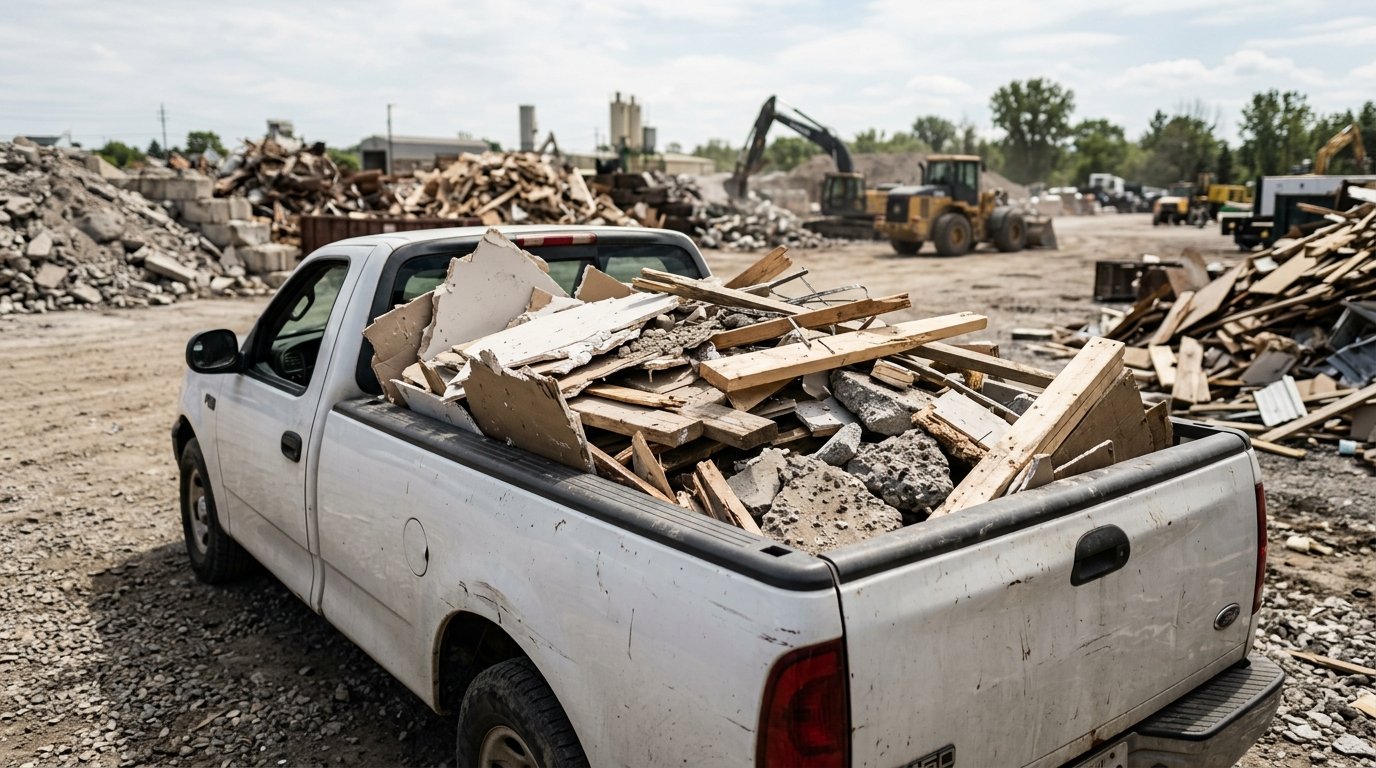
The short answer: Construction and demolition (C&D) debris — drywall, lumber, concrete, shingles, tile, and the like — goes to a C&D landfill or a transfer station that accepts it, usually charged by weight (per ton) or by the load. Clean concrete, brick, and metal can often be recycled separately, sometimes at a lower cost or even free. Regular household landfills don’t always take large C&D loads, so confirm the site accepts your material first.
A remodel or teardown produces a surprising amount of heavy waste, and dumping it isn’t the same as dropping off a few bags of trash. Here’s how C&D disposal works in Texas and how to keep the cost down.
What counts as construction and demolition debris?
C&D waste is the leftover material from building, renovating, or tearing down. Common types include:
- Drywall and plaster
- Lumber and engineered wood
- Concrete, brick, block, and asphalt
- Roofing shingles and tar paper
- Tile, stone, and porcelain
- Insulation, siding, and flooring
- Scrap metal and rebar
Most of this is heavy, which is why it’s almost always priced by weight rather than by the bag.
How much does it cost to dump construction debris?
Two pricing models dominate:
- By weight (per ton): the most common at C&D landfills. You’re weighed in and out, and charged for the tonnage you drop, often with a minimum fee.
- By the load: some transfer stations charge a flat rate based on vehicle or trailer size.
Heavy materials like concrete and tile add up fast by weight, so it pays to compare nearby sites and minimums. Compare real, sourced per-ton and per-load fees at facilities near you before you haul a full trailer.
Where can I dump it?
- C&D landfills — built specifically for construction waste and the most likely to take everything in one trip.
- Transfer stations that accept C&D — convenient, though they may cap load size or material types.
- Recycling facilities — for clean, separated materials (see below).
Not every household landfill accepts large C&D loads, and some have rules about mixing materials, so always check the site’s accepted items first.
What construction materials can be recycled?
Separating recyclables can cut your bill and your footprint:
- Concrete, brick, and asphalt are frequently accepted by aggregate recyclers, sometimes free or cheaper than landfilling, and crushed for reuse.
- Scrap metal and rebar can often be sold or dropped at a metal recycler.
- Clean lumber is sometimes accepted for mulch or reuse.
- Asphalt shingles are recyclable at select facilities.
The catch is that recyclers usually want materials sorted and clean — concrete with no trash mixed in, metal separated out. A little sorting on the job site can save real money at the gate.
Self-haul or rent a dumpster?
- Self-haul (your truck or trailer) is cheapest for smaller jobs if you don’t mind the trips and the facility fees.
- A roll-off dumpster makes sense for bigger projects — you fill it on site and the company hauls and disposes of it, with the disposal cost built into the rental.
For one or two loads, self-hauling to a nearby C&D site is usually the better deal.
FAQ
Can I put construction debris in my regular trash?
No. C&D waste is too heavy and bulky for curbside carts and is often prohibited. It needs to go to a C&D landfill, a transfer station that accepts it, or a recycler.
How are construction debris fees calculated?
Usually by weight (per ton) at C&D landfills, or as a flat per-load rate at some transfer stations. Heavy materials like concrete cost more because they’re priced by tonnage.
Can I dump concrete for free in Texas?
Sometimes. Clean, separated concrete is often accepted by aggregate recyclers at a lower cost than landfilling, and occasionally free. It usually must be free of trash and rebar.
Do I need to sort my debris?
Not for a mixed C&D landfill, but sorting clean concrete, metal, and wood for recyclers can lower your total cost.
Last updated: June 2026. Acceptance and pricing vary widely by facility — confirm before hauling. Every site in the DumpFeeFinder directory shows per-ton and per-load fees, accepted materials, and minimums, all sourced and dated.