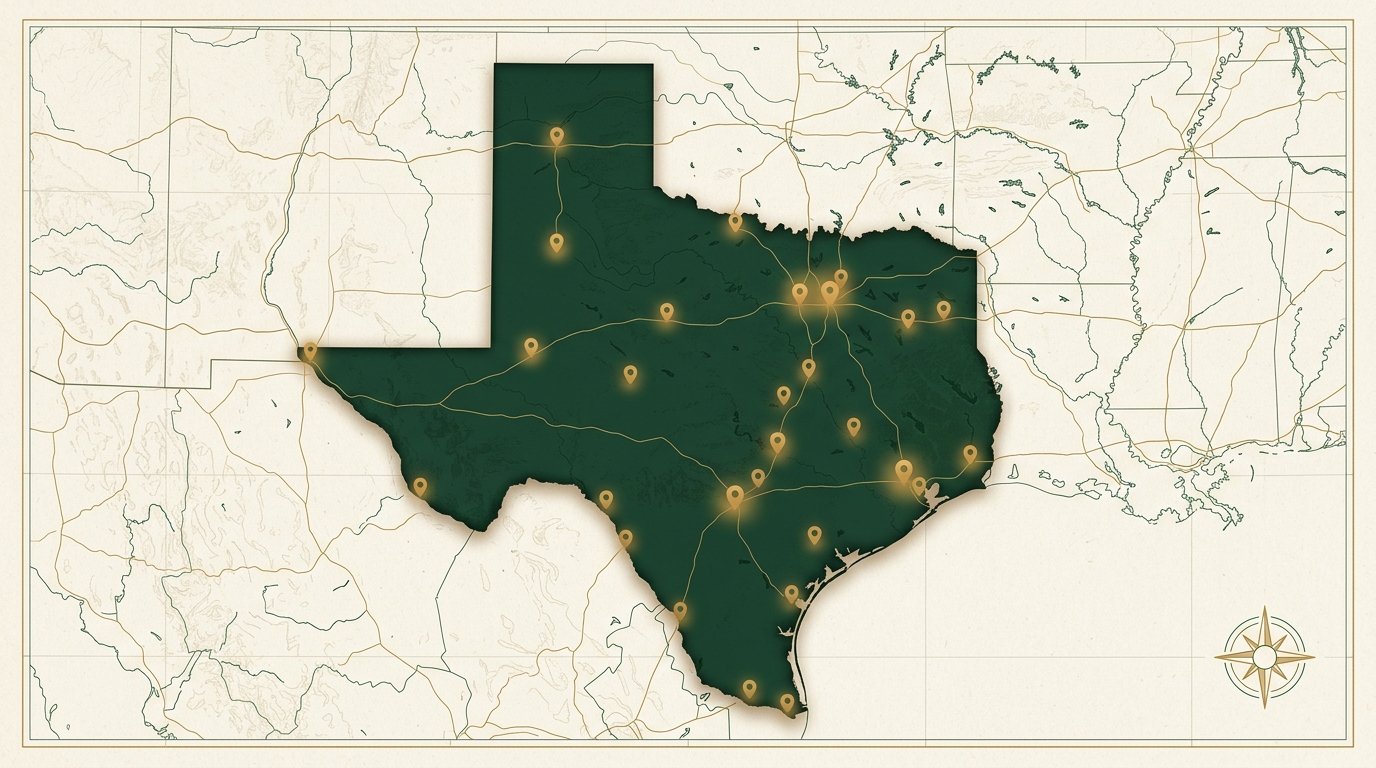
The short answer: To dump trash in Texas you have three main options — a municipal landfill (best for big or mixed loads), a transfer station (closer in, good for everyday household waste), or a recycling/drop-off center (for sorted material). If you live inside a city that runs its own site, you can often dump household waste for free with proof of residency. Always confirm the fee and hours on the facility’s listing before you drive — many don’t post prices online, and some are cash-only.
The three kinds of “dump” in Texas
People search “where to dump trash near me,” but there isn’t one type of place — there are three, and picking the right one saves you time and money:
- Landfill: the big one. Takes almost everything, usually charges by weight, and is often the cheapest per pound for large loads. Can be a longer drive.
- Transfer station: a closer-in site where waste is collected before being hauled to a landfill. Great for normal household loads; many cities run these for residents.
- Recycling / drop-off center: for separated material — metal, cardboard, yard waste, electronics, sometimes bulky items. Often free for the right materials.
Can you dump for free?
Often, yes — if you use your own city or county’s facility and bring proof you live there. Most Texas cities that own a landfill or transfer station let residents drop off household waste at no charge (or a small flat fee), as long as you show a Texas driver’s license or utility bill with a local address. The usual conditions:
- Household waste from your own home — not from a business or job site.
- A car, pickup, or small trailer — bigger loads pay commercial rates.
- Proof of residency in hand at the gate.
If you’re outside city limits, check your county’s sites — a “city” landfill will usually charge you the full commercial rate.
Where to dump trash in Texas’s biggest cities
Dallas
Dallas residents can use McCommas Bluff Landfill and the city’s transfer stations — household waste is free with proof of residency, and the landfill is open six days a week. See our full McCommas Bluff guide for hours, the commercial rate, and the load rules.
Houston
Houston runs neighborhood depository/recycling centers for residents, plus regional landfills for larger loads. Resident sites take household junk, tree waste, and tires within limits — search Houston in our directory for the closest one and what it accepts.
Austin
Austin’s Recycle & Reuse Drop-Off Center handles a huge range of household material, and area landfills take the rest. Many drop-offs are free for residents; bulky and hazardous items have their own rules.
San Antonio & Fort Worth
Both cities operate resident drop-off and recycling centers alongside commercial landfills. As always, the free rate is for residents with proof — look up the specific site in our directory for current fees and hours.
What you can’t put in a regular load
Some things are banned from the normal trash or charged separately almost everywhere in Texas:
- Liquid paint, motor oil, solvents, chemicals — these are household hazardous waste. See our paint disposal guide.
- Tires — usually limited and charged per tire.
- Electronics and TVs — often free to recycle elsewhere; see our TV & electronics guide.
- Mattresses and appliances — frequently carry a surcharge. Our mattress guide covers the cheaper routes.
Before you drive: a 30-second checklist
- Confirm the fee and hours on the listing today.
- Bring proof of residency for the free rate.
- Bring cash — many smaller sites don’t take cards.
- Cover your load to avoid an uncovered-load penalty.
- Pull out anything banned or surcharged and handle it separately.
Ready to find your closest site? Search your city or county in our Texas directory — every listing shows the published fee, the date we verified it, and a source link, so you can check before you load up. Curious how the pricing works statewide? Read how much it costs to dump trash in Texas, and see how we keep every listing honest on our Data Promise page.
Hours, fees, and residency rules vary site to site and change over time. Confirm on the facility’s listing the day you plan to go — one phone call beats a wasted trip.